petals with mettle

View Gallery
2 Photos
by Paula M. Bodah
despite a delicate appearance, hardy poppies bring vivid color to your garden
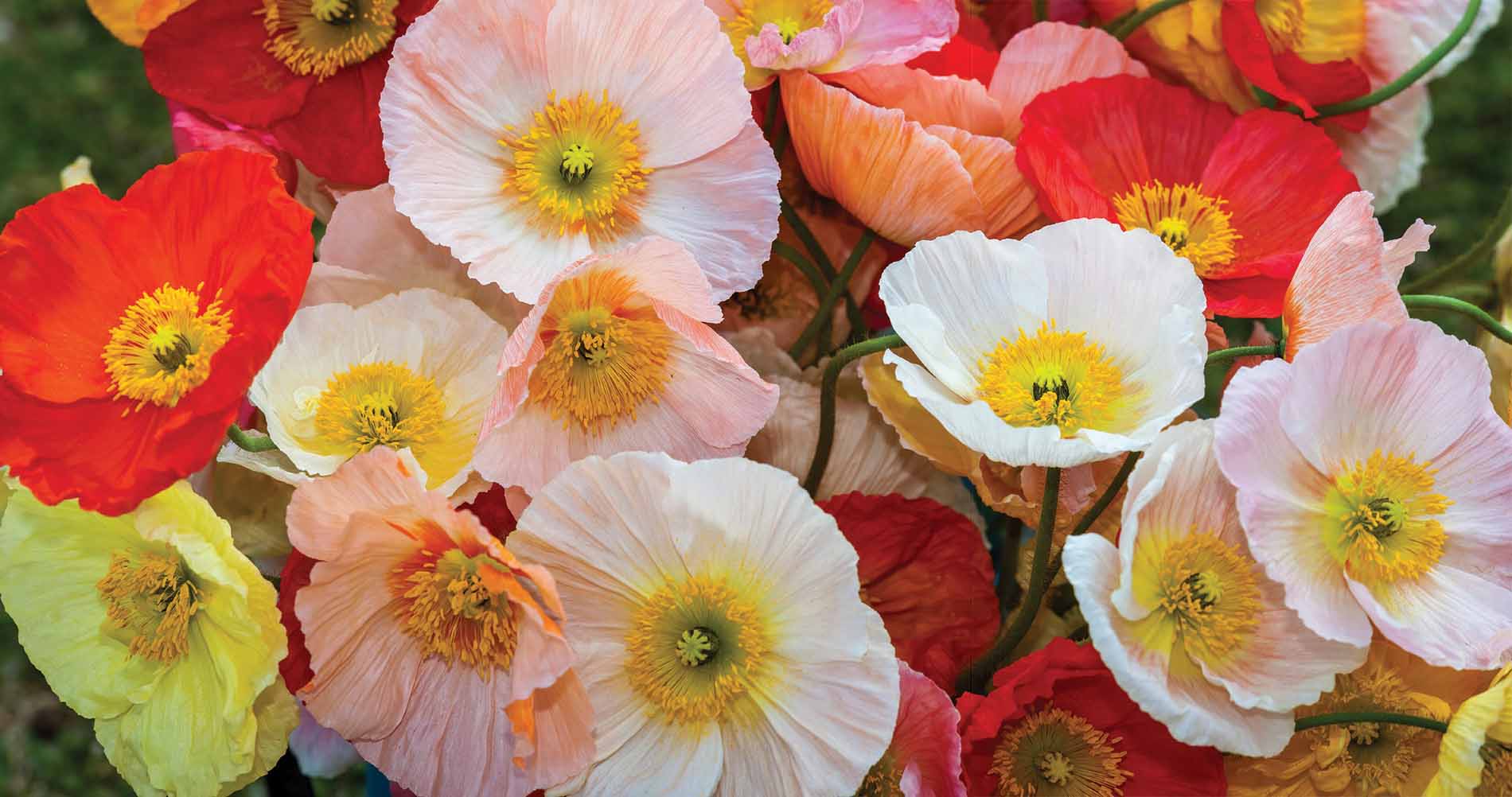
IT’S A RARE INDIVIDUAL who can resist the charms of the poppy. Their tissue-thin petals waft so prettily in the breeze. And their colors—from snowy white and soft pink to showy reds and oranges to dramatic purples—are so vivid that they can’t help but play a starring role in any garden.
Poppies, members of the papaveraceae family, come in as many as 50 varieties, although most home gardeners stick with a few of the more familiar types.
Oriental poppies are a favorite, with their eye-catching shades of red, orange or white with a dark purple center. Icelandic poppies sport candy-like hues of buttercream, bubblegum and pineapple sherbet sprouting from low-growing foliage. For drama, try one of the Opium varieties (legal to grow, as long as you don’t plan to use them to manufacture opium), such as the Black Swan with its frilly burgundy petals or Hungarian Blue with its deep violet-blue flower.
Then there are California and Mexican poppies—sort of a cousin to the actual poppy, belonging to a separate genus in the papaveraceae family— which thrive so well in desert climates that they are sometimes considered wildflowers. “California poppies have a nice desert look and are very drought tolerant,” says Tyler Leslie, co-owner of Rehm’s Nursery and Garden Center in Albuquerque. He favors the Mission Bell variety for its range of colors, from pink to orange to red.
As delicate as they look, poppies are surprisingly hardy and easy to grow as long as gardeners follow a few ground rules. Many varieties are technically perennials, but they don’t always reliably come back year after year, especially in hotter areas like the Desert Southwest. “Most people grow them as springtime annuals,” says Jesse Darling, general manager of Jericho Nursery in Albuquerque. They tend not to love the brutal heat of summer.” He recommends starting poppies from seed rather than buying plants from a nursery. “They send down a taproot that’s not too happy about being transplanted,” he notes.
In the Albuquerque area, March is a fine time to scatter seeds. “Pick a spot that gets a good chunk of sun early in the day, and keep it consistently moist until the seeds germinate,” Darling says. Gardeners in Santa Fe or other points farther north should wait longer. Leslie suggests sowing seeds in early to mid- May after the danger of frost has passed.
Darling advises applying a high-phosphorus fertilizer for the classic varieties when blooming begins. California and Mexican poppies, on the other hand, don’t need the extra help. “They thrive on neglect,” Rehm says, “so you can skip the feeding.” Both pros agree that frequent deadheading—removing spent blooms—will keep the flowers coming, no matter the plant.
To show off your poppies, consider adding companion plants known for their foliage rather than their blossoms to play a supporting role. “In a shade bed, adding hostas and coral bells would make a pretty combination,” Leslie says.
When the blooming season has ended, take heart. Poppies are prolific re-seeders, and you may just find them making an appearance again come next spring.
resources
Rehm’s Nursery and Garden Center
Jericho Nursery
| Cookie | Duration | Description |
|---|---|---|
| __gads | 1 year 24 days | The __gads cookie, set by Google, is stored under DoubleClick domain and tracks the number of times users see an advert, measures the success of the campaign and calculates its revenue. This cookie can only be read from the domain they are set on and will not track any data while browsing through other sites. |
| _ga | 2 years | The _ga cookie, installed by Google Analytics, calculates visitor, session and campaign data and also keeps track of site usage for the site's analytics report. The cookie stores information anonymously and assigns a randomly generated number to recognize unique visitors. |
| _gat_gtag_UA_4680668_1 | 1 minute | Set by Google to distinguish users. |
| _gid | 1 day | Installed by Google Analytics, _gid cookie stores information on how visitors use a website, while also creating an analytics report of the website's performance. Some of the data that are collected include the number of visitors, their source, and the pages they visit anonymously. |
| CONSENT | 2 years | YouTube sets this cookie via embedded youtube-videos and registers anonymous statistical data. |
| iutk | 5 months 27 days | This cookie is used by Issuu analytic system to gather information regarding visitor activity on Issuu products. |
| Cookie | Duration | Description |
|---|---|---|
| IDE | 1 year 24 days | Google DoubleClick IDE cookies are used to store information about how the user uses the website to present them with relevant ads and according to the user profile. |
| test_cookie | 15 minutes | The test_cookie is set by doubleclick.net and is used to determine if the user's browser supports cookies. |
| VISITOR_INFO1_LIVE | 5 months 27 days | A cookie set by YouTube to measure bandwidth that determines whether the user gets the new or old player interface. |
| YSC | session | YSC cookie is set by Youtube and is used to track the views of embedded videos on Youtube pages. |
| Cookie | Duration | Description |
|---|---|---|
| __gpi | 1 year 24 days | No description |