by Kate Jonuska
have a beautiful garden while saving our precious water resource
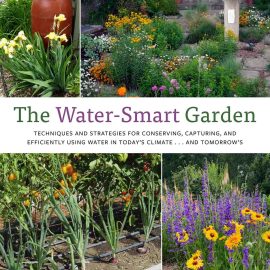
IF WATERING LAWNS and other outdoor plants accounts for 30 to 70 percent of the average American household’s water use, imagine how much water could be saved in a thirsty world if more homeowners shifted to water-conscious landscaping. In her new book, “The Water-Smart Garden,” Noelle Johnson explains the need for such a shift persuasively and lays out accessible steps for anyone—in any climate—to become more water-smart.
“Imagine a garden that thrives with less water, adds beauty, and thrives in your outdoor space,” Johnson writes, convincingly explaining, “You don’t need to sacrifice beauty for water efficiency—you can have both.”
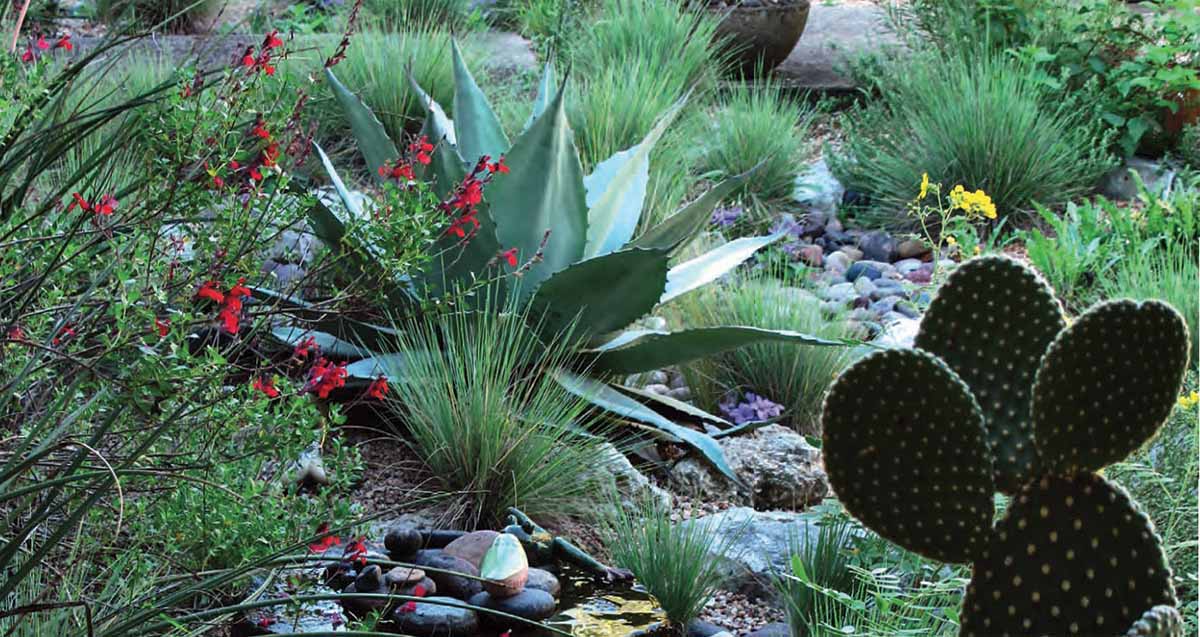
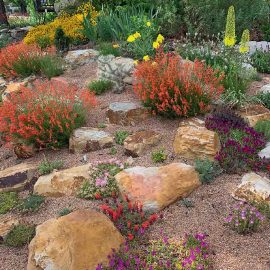
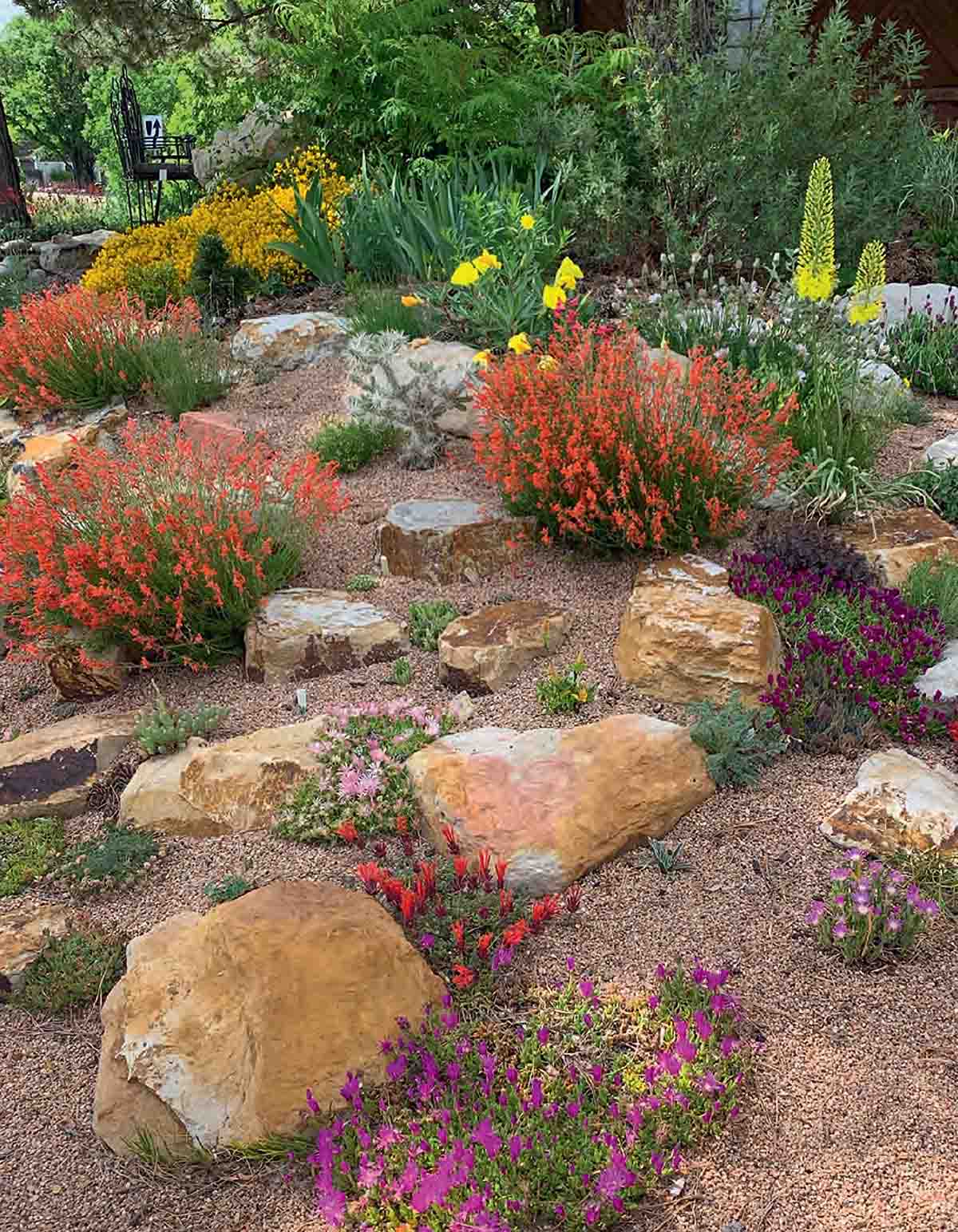
Indeed, the color and beauty of plants that don’t require a ton of water are on display throughout the book, though “The Water-Smart Garden” is a reference book and guide more than an art book meant for the coffee table. Full of lists, projects and wisdom, this book is geared toward people who like learning and getting their hands dirty.
Especially inspirational are the hands-on experiments to explore and understand your particular soil, activities such as charting sun exposures, watching where rain pools or streams, and the soil texture jar test. That information is key when deciding if and where to implement solutions like soil amendments, active or passive rainwater collection, and shade or windbreaks.
In these pages, expect new solutions to water challenges like poly tubing and drip tape for evaporation-free watering, but also a celebration of humanity’s past water-saving ideas, like buried clay ollas that have served a similar purpose for centuries. Johnson believes both the old and new ways will be necessary as our climate changes—and not just in currently arid zones.
“The incidence of drought is increasing worldwide and isn’t just restricted to dry climate regions,” she writes, adding, “Whether you live in a region where water is scarce or where rainfall supplies most of your water needs, our overuse of water invites us to reexamine our relationship with water and not take it for granted.”