by Heather Shoning
create a fun, environmental message in a bottle
TERRARIUMS HAVE BLOSSOMED from a niche hobby into a major trend in home decor these days. The miniature, self-contained gardens allow anyone—from city apartment dwellers to suburban homeowners—to bring a piece of nature indoors. Beyond their aesthetic appeal, terrariums also reflect a broader cultural shift toward sustainability, mindfulness and biophilic design— the practice of incorporating natural elements into living spaces. Whether you prefer lush mossy landscapes or minimalist succulent arrangements, terrariums offer a creative, low-maintenance way to green up your space.
A terrarium can thrive on a desk, windowsill or coffee table, adding freshness without taking up much room. Many terrarium plants—such as mosses, ferns, succulents and air plants—require minimal watering and care. Closed terrariums, in particular, create their own miniecosystems where moisture recycles naturally through condensation and evaporation. This makes them ideal for busy lifestyles or for people new to plant care.
Terrariums fit beautifully with contemporary design trends. Glass containers filled with layered soil, pebbles and greenery offer a clean, modern aesthetic that pairs well with minimalist, Scandinavian and eco-chic interiors. Designers and influencers have embraced them as both decor and art, using creative shapes—like geometric glass domes or hanging globes—to add a sculptural element to interior spaces.
And, the act of making a terrarium taps into the growing movement toward mindfulness and crafting. Building one is soothing, tactile and rewarding—a bit like gardening in miniature. It’s no wonder terrarium workshops and DIY kits have become popular gifts and weekend activities.
Types of Terrariums
There are two main types of terrariums: open and closed. Both styles can be stunning, but your choice should depend on the plants you wish to grow and the atmosphere you want to create.
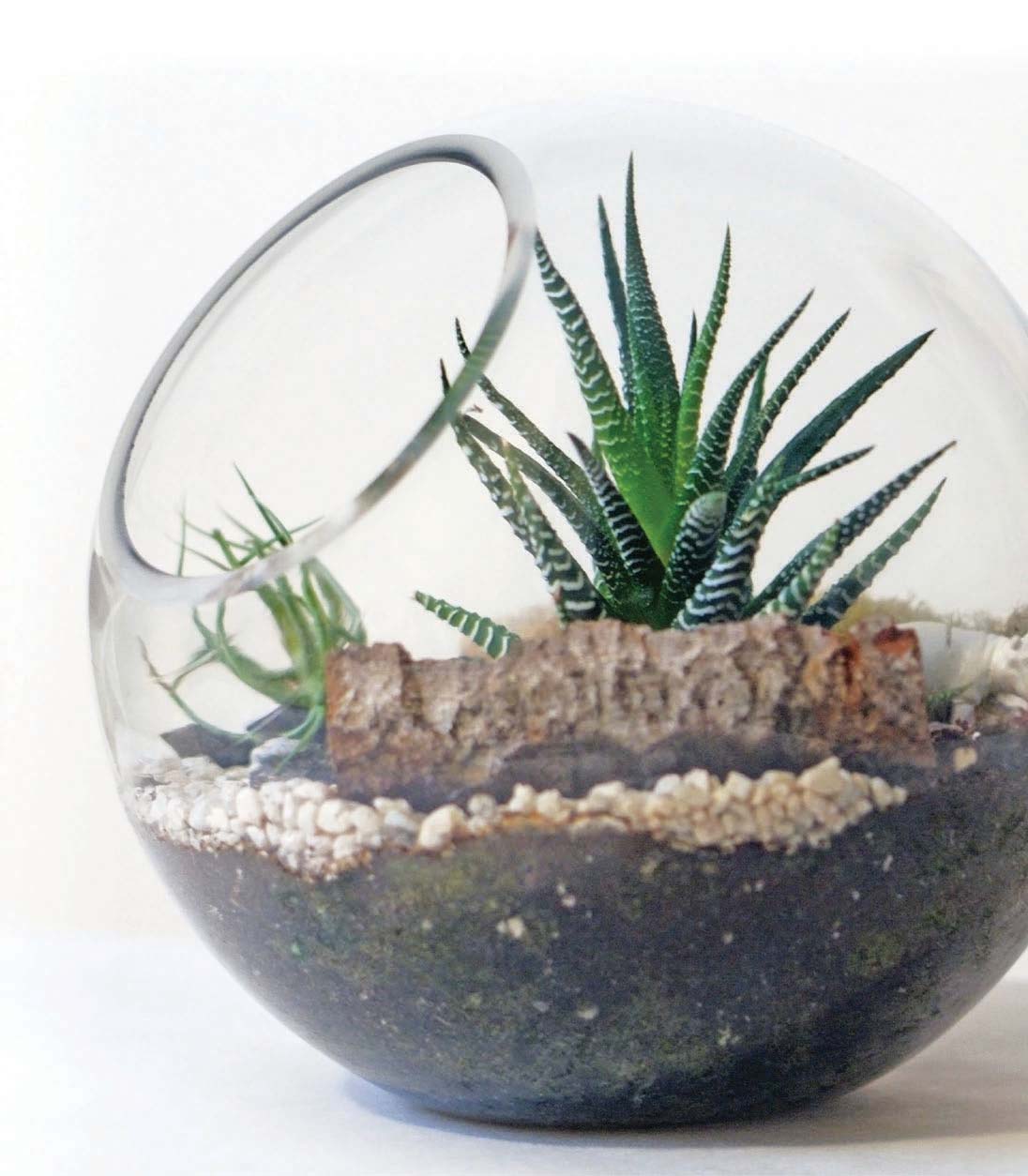
Open terrariums are best for succulents, cacti and air plants that prefer drier conditions. The open design allows airflow and prevents excess humidity. These terrariums often feature decorative gravel, sand and stones, giving them a desert-like or sculptural look.
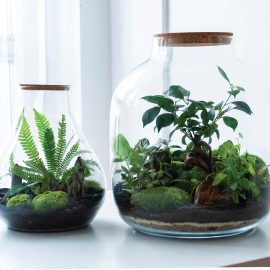
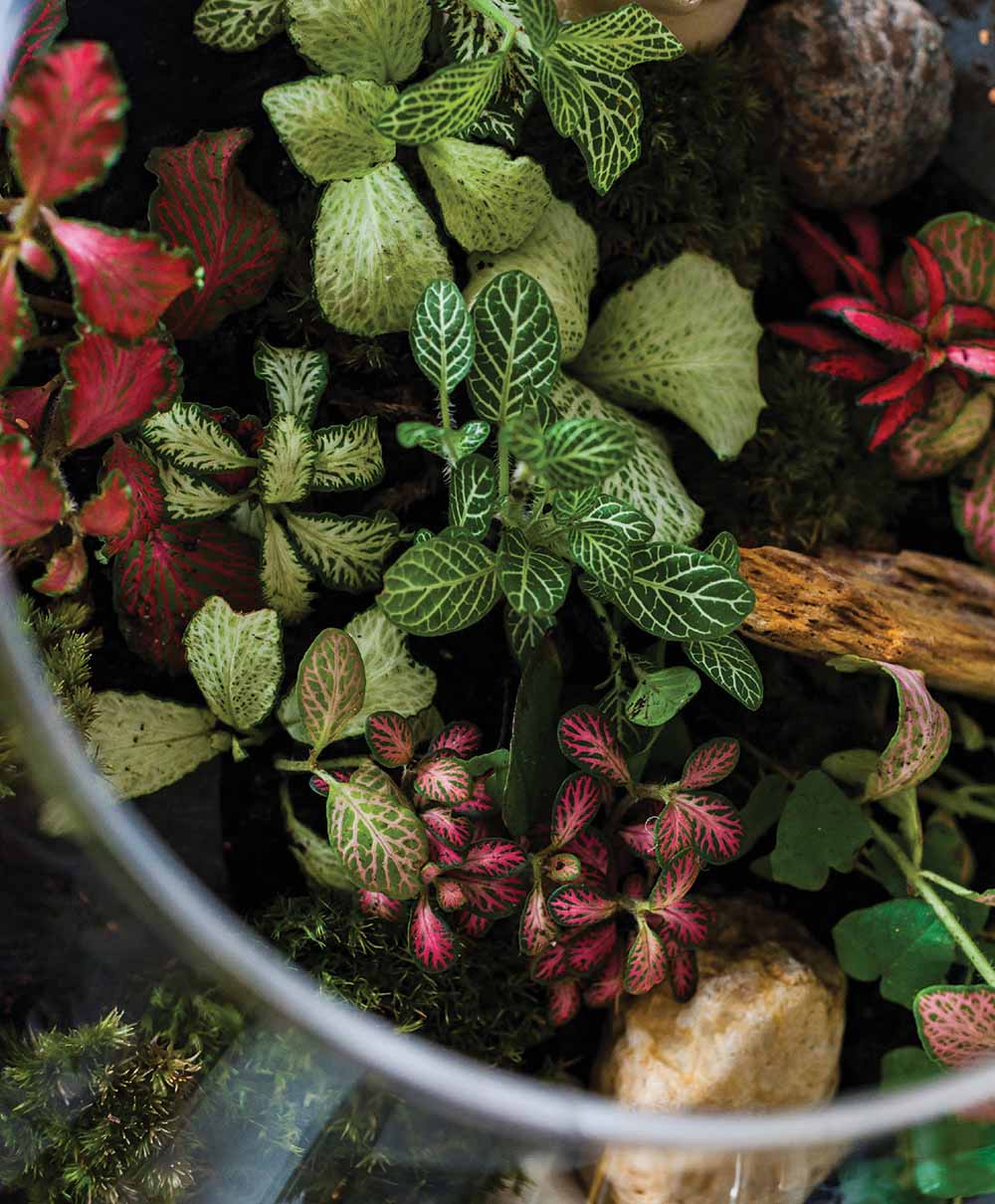
Closed terrariums, on the other hand, are ideal for tropical plants like ferns, mosses—even miniature orchids. With a lid or cork seal, they maintain high humidity levels and recycle their own moisture, forming a self-sustaining ecosystem. Over time, these terrariums develop their own microclimates, complete with condensation cycles and thriving mossy floors.
A well-balanced terrarium is surprisingly easy to maintain. Watch for signs of too much moisture—foggy glass or mold growth—and open the lid occasionally to let in fresh air if needed. Remove any dead leaves to prevent decay. Most terrariums thrive in moderate room temperatures and gentle light, mimicking the dappled conditions of a forest floor.
More than just trendy decorations— terrariums are living artwork and tiny worlds that remind us of nature’s resilience and beauty. Whether you choose a sleek, modern succulent sphere or a lush rainforest in a jar, your terrarium can bring calm, creativity and a touch of green magic into everyday life.
how to create your own terrarium
Building a terrarium is simple and rewarding.
Here’s a step-by-step guide to get started.
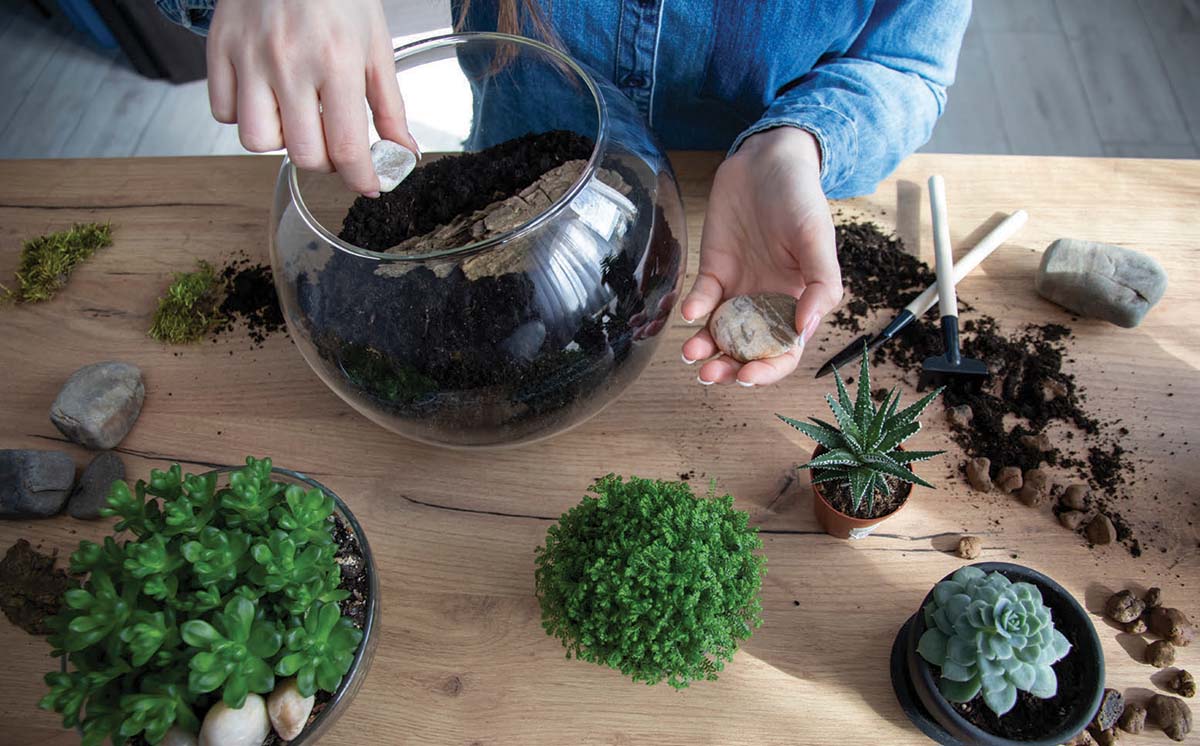
1. Choose Your Container
Almost any clear glass vessel will work: jars, bowls, vases, bottles or geometric terrariums. Transparency is key—it lets light reach the plants and allows you to admire the layered design. Clean the container thoroughly to remove any dust or residue.
2. Add a Drainage Layer
Since terrariums lack drainage holes, it’s important to prevent waterlogging. Start with a layer of small pebbles, gravel or coarse sand at the bottom—about one inch deep for smaller containers, or more for larger ones. This layer traps excess water away from plant roots.
3. Include Activated Charcoal
A thin layer—aim for ¼- to ½-inch—of activated charcoal on top of the drainage layer helps filter water, prevent odors and keeps the environment fresh—especially in closed terrariums. The jury is out on whether or not this is necessary, but it won’t hurt your plants, so err on the side of clean and cautious.
4. Include a Layer of Moss
Not just any moss, and definitely not peat moss—you want sphagnum moss for this. It helps regulate moisture and aids drainage. It can also help the soil stay put.
5. Add Soil
Next, add potting soil suitable for your plant type. Cactus and succulent mixes work best for open terrariums, while rich, moisture-retaining soil is ideal for ferns and mosses. Create gentle slopes or mounds for visual interest.
6. Arrange Your Plants
Select small plants that will fit comfortably within the container and won’t outgrow it quickly. Before planting, remove excess soil from the roots and trim if necessary. Dig small holes and gently place each plant inside, patting the soil around the base. Aim for an organic, layered look—taller plants at the back, shorter ones in the front.
7. Decorate and Personalize
This is where creativity shines. Add decorative elements like moss, stones, figurines, bark or shells to give your terrarium character. A miniature pathway, tiny mushrooms or a small crystal can transform your terrarium into a whimsical landscape.
8. Water and Care
Water lightly using a spray bottle or spoon. Closed terrariums need watering only every few weeks or less, while open terrariums may require a bit more frequent care. Avoid overwatering—roots sitting in soggy soil can quickly rot. Place your terrarium in bright, indirect light, away from harsh direct sun that could overheat the glass.