by Kate Jonuska
this Western style is a genre all its own
THE CONCEPT of the great American frontier is but history book fodder. That frontier’s fierce independence of spirit, however, is still alive and well in the region’s style, which today balances a celebration of Western authenticity with the need to buck even its own conventions in order to grow. Calling it “a style defined by contemporary sensibilities and regional authenticity,” Chase Reynolds Ewald collects an illustrated and inspirational report from the front lines of this design frontier in “Modern West.”
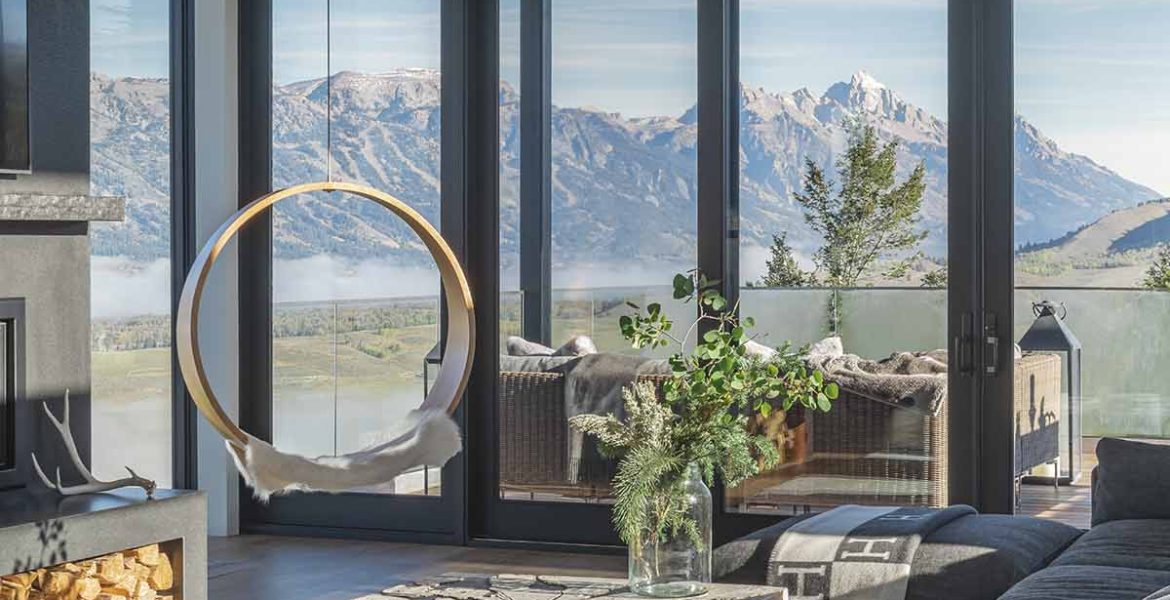
Don’t expect this modern Western style of architecture and interior design to rely upon tropes like antler chandeliers or plaid flannels. In the “Modern West,” the exposed logs and ceilings so popular with log-cabin living are replaced with materials like planed barn wood, which adds organic warmth with cleaner lines. Rather than forest tones, designers use powerful black for woodwork and fireplaces, and they enjoy contrasting industrial materials like steel and even concrete against natural ones like copper and stone.
“It’s not that often that you see architecture pushing that envelope,” says Tim Rote of Dovetail Construction, who oversaw a featured project in the Crazy Mountains of Montana that combined exposed steel beams with reclaimed wood. Mixing old and new, hard and soft, he says, “brings a whole other meaning of timelessness to it.”
Of course, some projects in “Modern West” embrace modernism full-on, in one case creating the ultimate in clean lines by cladding 90 percent of the home’s interior in poplar paneling with no visible hardware. The TV, bar and even kitchen appliances can be hidden by poplar, as if the home was carved from a tree.
But varied as they are, all of these modern homes treat the Western landscape as a houseguest by welcoming in the view, often via steel-and-glass window walls or from multiple outdoor living spaces.
“Modernism here is not a singular aesthetic but a broad and evolving spectrum, spanning historic renovations, bold contemporary builds, and everything in between,” Ewald writes. “What unites them is a deep respect for the landscape, a pursuit of authenticity, and an understanding that a home in the West is not just about where you live, but how you choose to live.”