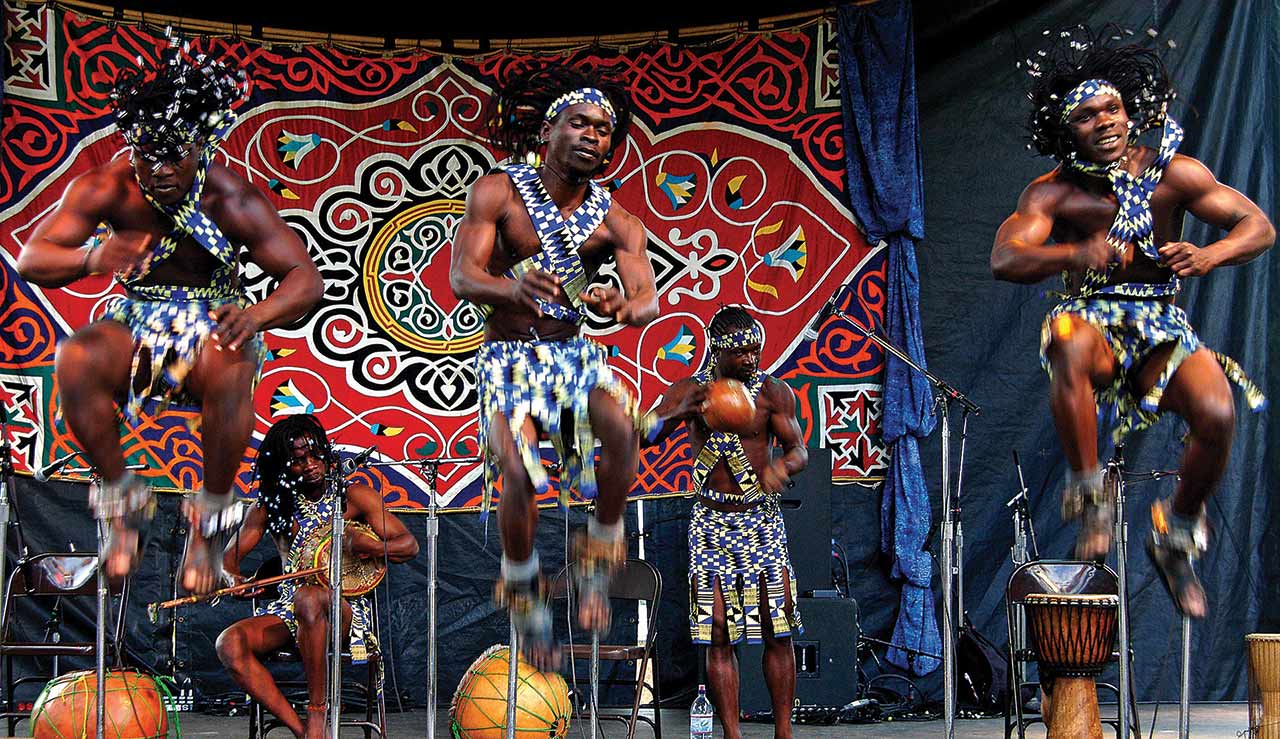
the world comes to Santa Fe for the weekend
by Lisa Van Sickle
Museum Hill in Santa Fe will overflow with sights, sounds, and aromas from all corners of the world as the International Folk Art Market (IFAM) takes over Milner Plaza, July 13–15. Even though this is the 15th market, IFAM is the new kid in town (compared to Traditional Spanish Market and Santa Fe Indian Market), but its reach extends to all corners of the world.
The first International Folk Art Market, held in July 2004, was two years in the making. A small group of Santa Feans with the expertise, energy, and connections necessary to organize such an event put together the funding and people-power—much of it volunteer—to bring 61 artists from 36 countries to Museum Hill. No one knew what to expect. They hoped that over the two days, 5,000 people might come. To everyone’s astonishment, crowds began lining up hours before the market opened, and people just kept coming: 12,000 in all. Sales approached $1 million. The organizers realized IFAM had the power to change lives.
What is folk art, anyway? IFAM defines it, in part, as utilitarian and decorative items, made by hand, expressing cultural identity by conveying shared community values and aesthetics. Folk art by its very nature is rooted in tradition, with skills handed down directly from older artists to younger people. It might mean intricate embroidery from Lao PDR or the Palestinian Territories; jewelry from Tuareg silversmiths from Niger or from an artists’ cooperative in Bolivia; wool rugs from Kyrgyzstan; or drums made in Nigeria. At IFAM, these handcrafts are sold by the people who made them, all dressed in their finest traditional clothing.
The 2018 market will host 162 artists from 53 countries, some new to market, others returning. The exhibitors were chosen from 640 applicants, narrowed down by selection committees made up of curators and academics familiar with art from each region. Experts in business and marketing have a say, ensuring that the chosen vendors will do well in Santa Fe. Final selections are made, according to Sandy Peinado, Director of Artist Opportunities and Social Impact, to create what she calls “the magic of the market,” a wonderfully balanced range of regions, types of work, and price points.
In 2017, 22,000 people came to the market and spent over $3.1 million. Ninety percent of the sales revenue goes home with the artists, with average sales equaling $20,000 per booth. The earnings have a huge impact, particularly for artists from developing countries where the average income is around $3 per day. “It’s one of the aspects of the Market that I love that isn’t [always] understood,” says Peinado. “With the money the artists take home they not only take care of themselves, but do wonderful things for their communities.” She tells of a man from Ghana who built a better road for his community, and a co-op from India that funds healthcare for women. IFAM collects gross receipts tax on sales (although as a nonprofit they are not required to do so), adding over $255,000 to state and city coffers last year.
The goal of the market is to help folk artists become self-sustaining. To that end, Peinado organizes educational programs each year that are aimed at helping artists succeed at market and find other outlets for their work. This year, an experienced ESL teacher will teach a few necessary English words and phrases to those who don’t speak the language. New artists get special attention and mentoring from IFAM staff and volunteers and from experienced vendors.
According to Peinado, these first days are crucial for the artists. “For many of them, this is the first time they have been together in a community of people who do something similar.” Some of the artists are well-traveled and at home in the world; others have never been far from home and have just taken their first-ever airplane flights to get here.
With so many people attending—plus some 1,600 volunteers who make the market run—is there any hope of finding parking? IFAM has that covered. Park in either the PERA or South Capitol lot, where special buses run to and from Museum Hill, all included in the price of admission. For those coming from Albuquerque, the Rail Runner stops at South Capitol, immediately adjacent to the bus stop. Be sure to bring a friend or two, and immerse yourselves in the color, excitement, and hopeful spirit of the International Folk Art Market.
FOR MORE INFORMATION:
International Folk Art Market,
folkartmarket.org