by Paula M. Bodah
it’s colorful, fragrant, versatile and oh-so-simple to grow
SOME PLANTS are natural standouts, created to play a starring role in the garden. Think of the beautiful, romantic rose, the showy gladiola or the fun-loving sunflower. Then there’s the supporting cast, those species whose colors and foliage complement rather than compete with the star. They may not be the first plants to draw your attention, but they’re every bit as crucial to the success of a garden as their more celebrated comrades.
That’s where you’ll find yarrow. Low-growing and bushy, or tall enough to wave in a breeze, yarrow is something of a workhorse, creating a colorful, textural and often fragrant backdrop for the garden’s flashier florals.
Yarrow, a perennial herb, is legendary for its medicinal properties. According to lore, the plant—whose Latin name is Achillea—was named after the mythical Greek hero Achilles, who is said to have used it to stem the bleeding of his soldiers’ wounds. New Mexico’s indigenous cultures used all parts of the plant, from flower to root, for an array of medical issues from toothaches to digestive problems to the common cold. Luckily, the useful plant grows with abandon in these parts.
New Mexico’s climate is yarrow-friendly, notes Linda Churchill, director of horticulture at Santa Fe Botanical Garden. “Almost any yarrow will do well, especially in the northern part of the state,” she says.
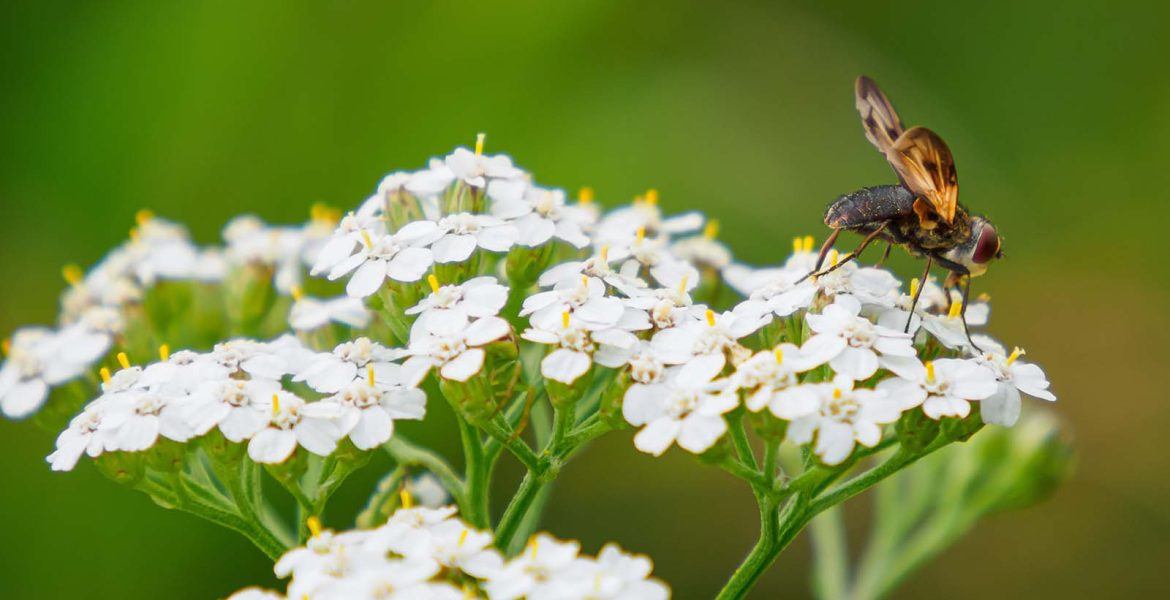
Achillea millefolium, also called common yarrow, is New Mexico’s single native variety. Its clusters of white flowers atop fern-like leaves are fragrant, making it a nice choice to cut and bring indoors. These, and yarrow in general, can be an important part of a pollinator garden. “The white one, especially, is much loved by butterflies and bees,” Churchill says.
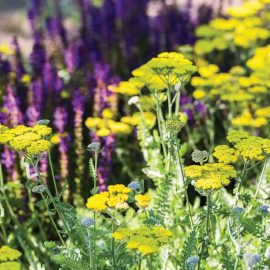
For those who crave color, many cultivars are readily available at local nurseries. Among the most popular is Moonshine, which can grow up to 24 inches and sports a flower of neon-bright citrine. “It’s a stunning plant,” Churchill says. “Landscapers like it because it has pretty foliage. It’s sturdy and upright and a gorgeous gray with a bit of a blue tinge.”
Moonshine blooms in late April and into May, earlier than most other varieties of yarrow, so gardeners don’t have to delay their gratification.
Coronation gold is also yellow, albeit a mellower, more golden version with silvery gray-green foliage that can grow as tall as four feet and blooms in early to mid-July.
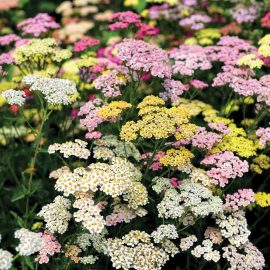
Yarrow also comes in a wide range of hues in the red family, from pale pink to ruby red to paprika and terracotta. “You won’t find it in blues or purples, but it makes a great contrast with plants of those colors in the garden,” Churchill says. Lavender, poppies, ornamental grasses and salvia all look even prettier when surrounded by yarrows of varying heights and colors.
For the best results, plan for yarrow in your garden now, but plant it in the spring in full sun, then ignore it, for the most part. Yarrows love poor soil, especially if its sandy, doesn’t need fertilizer and prefers to be watered no more than once or twice a week. To deadhead or not is the gardener’s choice. Cutting off spent flowers can help extend the bloom season, while leaving them on will offer interesting texture during the winter months. Finally, don’t forget to bring plenty of stems inside to dry for a bouquet to enjoy all year long.