by Patricia L. Garcia
hollyhocks thrive in New Mexico gardens
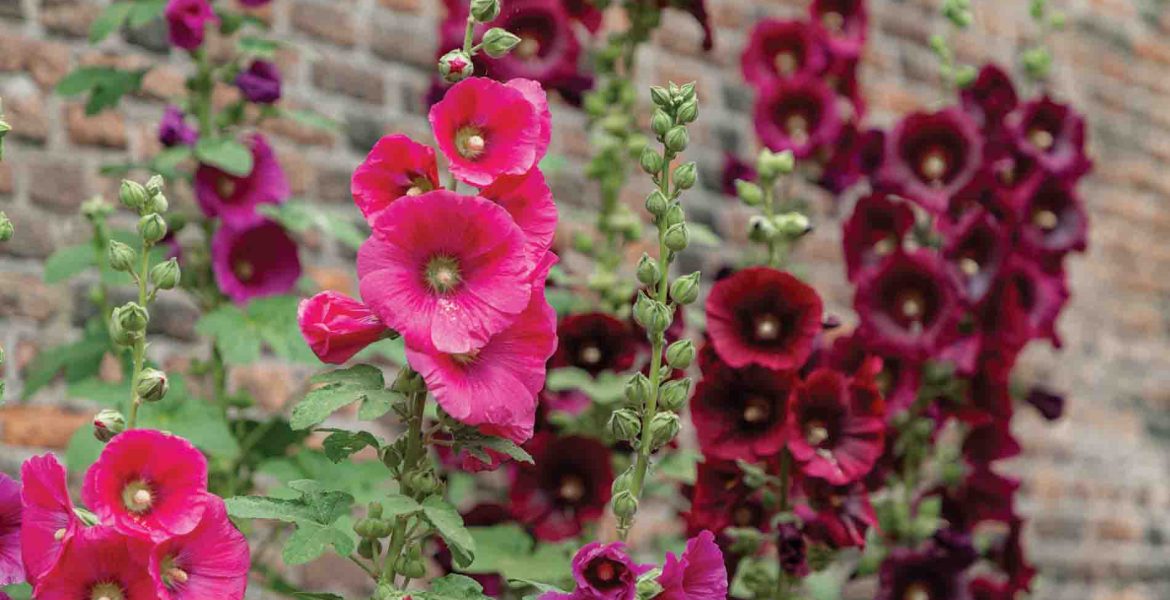
WITH THEIR TOWERING STALKS and myriad bold colors, hollyhocks are a staple for any New Mexico garden. Though not the official flower of New Mexico, the hollyhock is beloved for its sturdiness and beauty.
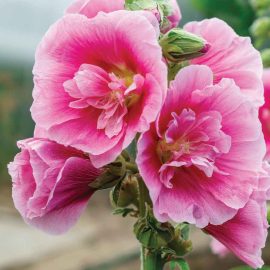
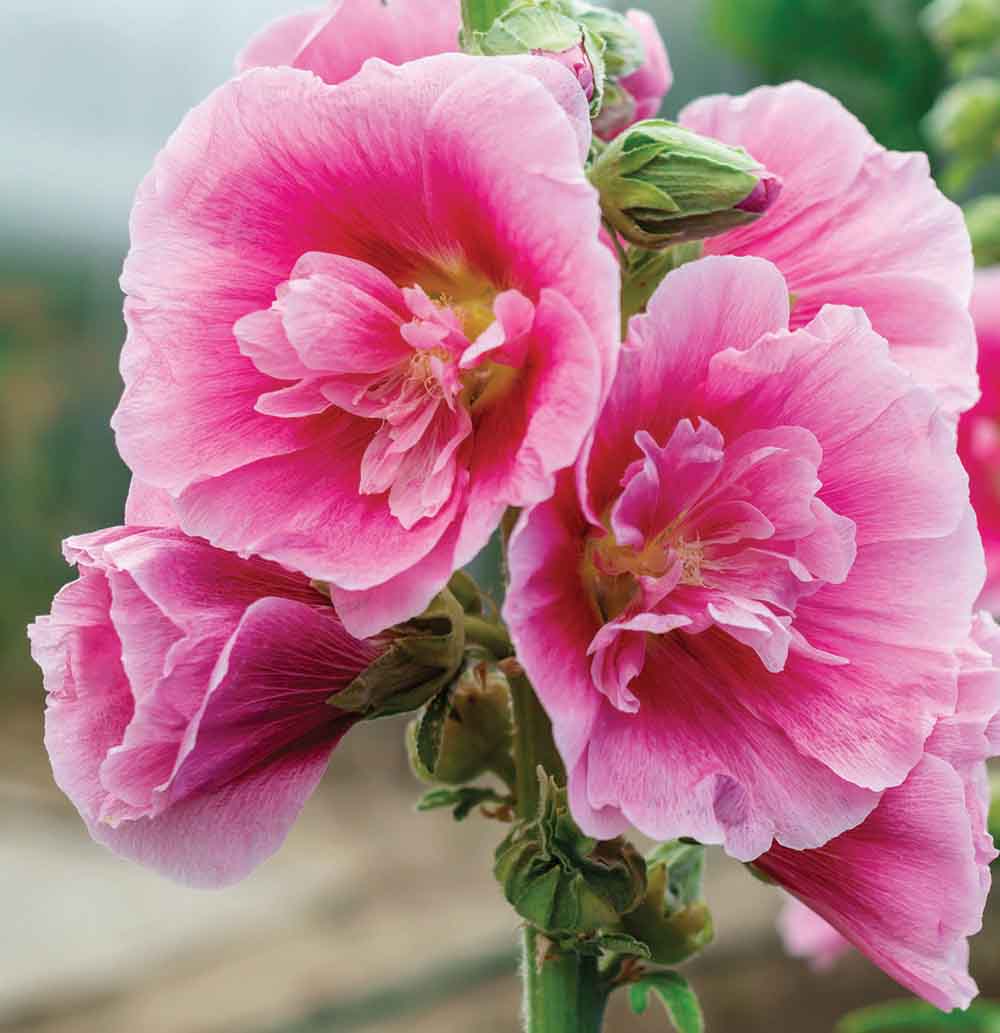
Albuquerque and Santa Fe gardeners have the privilege of choosing from various hollyhock types and colors, says Valerie Jones, production manager of Payne’s Nurseries South in Santa Fe. She says some popular varieties include the double-flowered “Chater’s Double” series and the vibrant “Nigra” with deep maroon blossoms. Colors range from pinks and whites to reds, yellows, purples and even halo types with more than one color.
Hollyhocks—known as Las Varas de San Jose or St. Joseph’s staff—are not particularly demanding when it comes to planting. Still, it should be done before the heat sets in, according to Vangie Chavez, who works in plant maintenance for Osuna Nursery in Albuquerque. “Late fall and early spring are the best times [to plant them] since the plant’s roots have time to establish themselves before the heat comes,” she says. She adds that the flowers are easy to grow from seed but suggests that newbies start with a potted plant from a nursery.
Once planted, hollyhocks require minimal care, making them a favorite for busy New Mexican gardeners. In fact, you’ll find the flowers growing in the unlikeliest of spots: in between the cracks in concrete and sidewalks, Jones says. If you prefer them in your garden, plant hollyhocks in well-drained soil, which helps prevent waterlogging that can lead to root rot. Chavez advises planting them in sandy or loamy soil mixed with compost for best results.
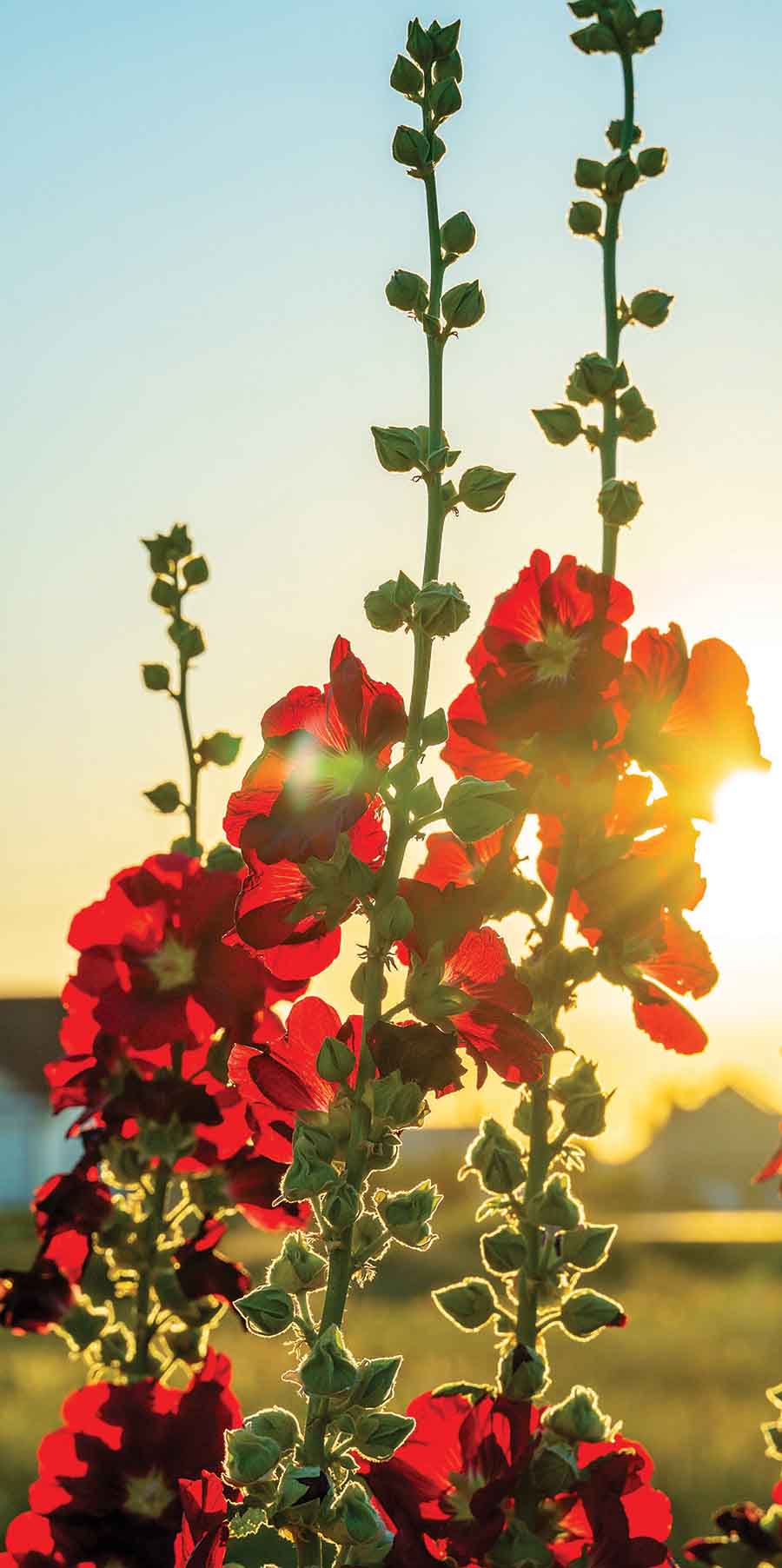
Though hollyhocks can grow in shady spots, they will thrive in full sunlight, so choose a place in your garden that receives six to eight hours of direct sunlight. They are drought-tolerant but benefit from regular watering during dry spells. Just be careful not to overwater them, Jones warns. “They’re kind of finicky in the sense that they do not like to be spoiled,” she says. These giants can grow anywhere from four feet to eight feet tall, so they sometimes need support. Provide stakes or cages to prevent them from toppling over in strong winds.
Chavez says most varieties are biennials, meaning they will produce foliage in their first year. Blooms appear in their second year, with the flowers appearing in the summer. The show continues throughout the summer months, providing a colorful display that enhances the beauty of your garden. The flowers are self-seeding, which means you’ll often have hollyhocks in your garden for many years with little effort.
With their towering presence and vivid colors, hollyhocks are a testament to nature’s ability to thrive in diverse environments. In Albuquerque and Santa Fe, these hardy bloomers stand as beacons of beauty in their harsh environment, adding charm and grace to gardens with minimal effort from their caretakers.
resources
Payne’s Nurseries
Osuna Nursery